
Navigating the immigration evaluations process can be stressful, especially when a case involves trauma, abuse, persecution, family separation, or emotional hardship. Legal documents are important, but they may not fully explain how these experiences have affected an applicant’s mental health and daily functioning.
Immigration psychological evaluations provide structured clinical documentation that may help explain these emotional and psychological effects. When relevant to the case, the resulting report can complement other evidence submitted by the applicant or legal representative.
Understanding the role of these evaluations can help applicants and attorneys decide whether psychological documentation may be useful in a particular immigration matter.
Learn more about our immigration psychological evaluations and how professional clinical documentation may support your case.
Why Do Some Immigration Cases Require More Than Legal Documents?
Immigration applications often include forms, identity documents, financial records, personal statements, and other supporting evidence. However, these records may not fully show the emotional or psychological effects of trauma, persecution, abuse, family separation, or hardship.
A qualified mental health professional can assess these experiences and document clinically relevant symptoms, emotional difficulties, and changes in daily functioning.
This type of documentation may help provide additional context when psychological or emotional factors are important to the immigration case.
What Are the Main Benefits of Immigration Evaluations for Applicants?
Immigration psychological evaluations can provide professional clinical documentation that complements personal statements and other supporting evidence.
Some key benefits include:
Provides Supporting Clinical Documentation
A psychological evaluation may document emotional distress, trauma-related symptoms, anxiety, depression, or other mental health concerns related to an applicant’s experiences.
The resulting report provides a structured clinical perspective that can be reviewed alongside other evidence in the immigration matter.
Documents Mental Health and Functional Impact
Some applicants have experienced difficult circumstances such as abuse, persecution, violence, separation, or major life changes.
An evaluation can help document how these experiences may affect:
- Emotional well-being
- Sleep
- Concentration
- Relationships
- Work or daily responsibilities
- Overall functioning
This can help provide a clearer picture of the applicant’s current circumstances.
Adds Professional Clinical Context
Psychological evaluations are prepared by qualified mental health professionals using clinical interviews, observations, and other appropriate assessment methods.
This professional context may help explain symptoms and emotional difficulties that are not easily shown through legal documents alone.
Helps Explain Complex Personal Circumstances
Immigration cases can involve experiences that are difficult to describe clearly in written statements.
A psychological evaluation may help organize and document relevant emotional and psychological information in a structured manner, making it easier for legal professionals and decision-makers to understand the applicant’s circumstances.
How Does an Immigration Psychological Report Support a Case?
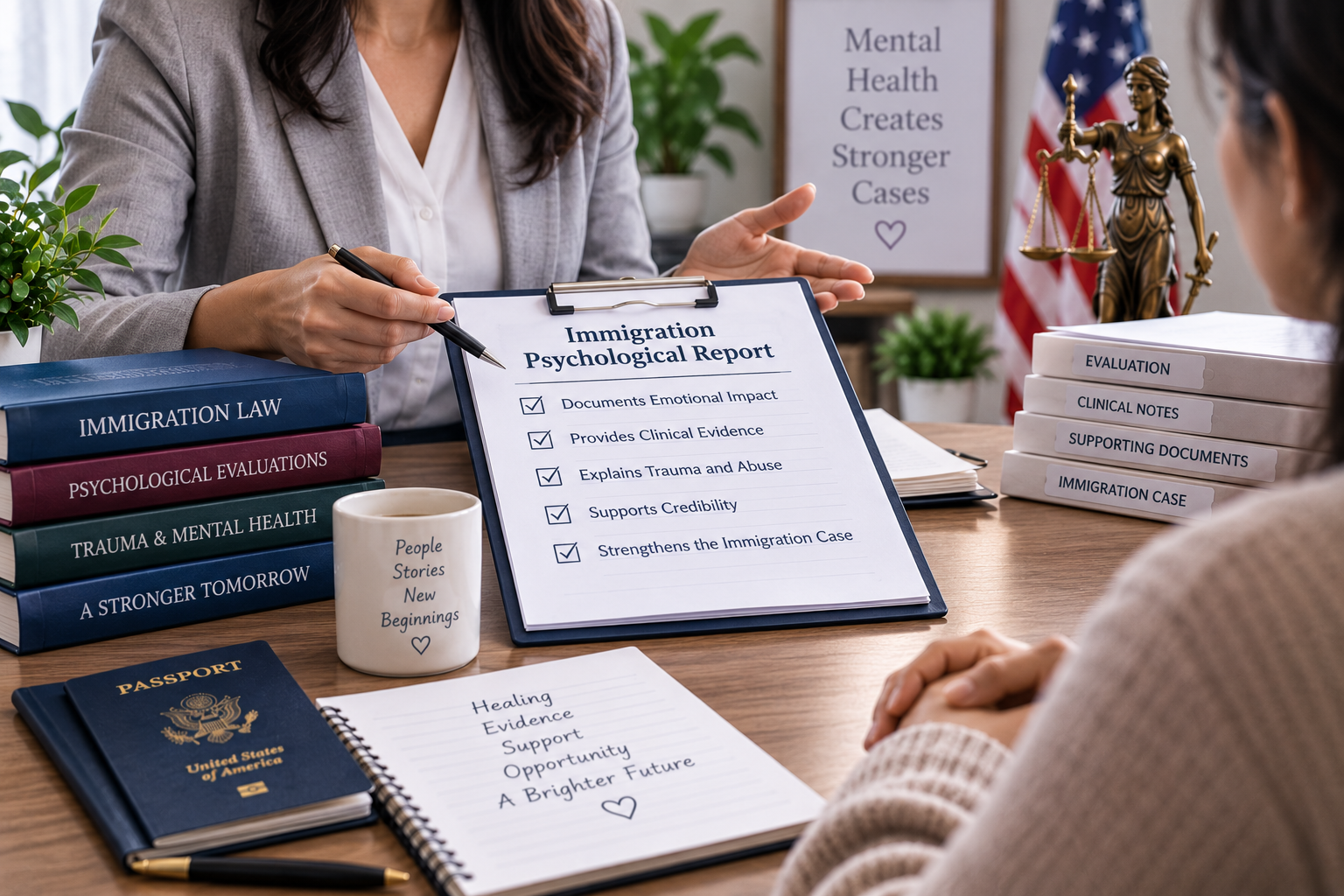
An immigration psychological report may document clinically relevant symptoms such as anxiety, depression, trauma-related distress, or other emotional difficulties connected to the applicant’s experiences.
A report may include:
- Clinical interview findings
- Relevant personal and psychosocial history
- Mental health symptoms
- Functional impact
- Clinical observations
- Assessment findings, when appropriate
- Professional conclusions based on the evaluation
The purpose of the report is to provide clinical documentation that may complement the other evidence submitted in the immigration matter.
Supporting Family and Hardship-Related Immigration Cases
Immigration attorneys may work with mental health professionals when psychological documentation is relevant to a client’s case.
Attorneys handle legal strategy, eligibility, filing requirements, and immigration arguments. Mental health professionals focus on clinical assessment and documentation.
Keeping these roles separate helps ensure that psychological findings are presented clearly without replacing legal advice or legal analysis.
Reducing Misunderstandings During the Review Process
Trauma and emotional distress can sometimes affect memory, communication, concentration, and a person’s ability to describe difficult experiences.
A psychological evaluation may provide clinical context that helps explain these difficulties.
This can be useful when an applicant has trouble discussing traumatic experiences or when emotional symptoms are important to understanding the person’s circumstances.
The Long-Term Value of Professional Documentation
A professionally prepared psychological evaluation creates a documented clinical record that may remain relevant throughout the immigration process.
Depending on the case, the report may be reviewed alongside other evidence during USCIS adjudication, attorney preparation, requests for additional evidence, or other immigration proceedings.
Types of Immigration Cases That May Use Psychological Evaluations
Psychological evaluations may be relevant in different immigration matters, including:
- VAWA psychological evaluations
- U-Visa psychological evaluations
- T-Visa psychological evaluations
- Asylum psychological evaluations
- Extreme hardship waiver evaluations
The purpose and focus of the evaluation will depend on the type of immigration case and the applicant’s individual circumstances.
Conclusion
Immigration psychological evaluations can provide valuable clinical documentation when trauma, emotional distress, family hardship, abuse, or other mental health factors are relevant to an immigration matter, including an Extreme Hardship Waiver case.
By documenting symptoms, daily functioning, emotional difficulties, and the reported effects of past experiences, the evaluation may complement legal documents and personal evidence already included in the case.
If you need professional immigration evaluations for a VAWA, U-Visa, T-Visa, asylum, or hardship waiver matter, Insight Health Evaluations provides structured, trauma-informed clinical assessments and written psychological reports.
FAQs About Immigration Psychological Evaluations
What is an immigration psychological evaluation?
It is a clinical assessment that documents emotional, psychological, and functional effects relevant to an immigration case.
Which immigration cases may use psychological evaluations?
They may be relevant for VAWA, U-Visa, T-Visa, asylum, and extreme hardship waiver cases.
Who performs an immigration psychological evaluation?
A qualified licensed mental health professional typically conducts the evaluation and prepares the written report.
What does an immigration psychological report include?
It may include clinical findings, mental health symptoms, relevant history, functional impact, and professional observations.
Can a psychological evaluation guarantee immigration approval?
No. It provides supporting clinical documentation, but the final immigration decision is made by the appropriate immigration authority.